We’re at a threshold moment.
21 years ago, my husband planted a Pink Pagoda Ash tree in our front yard, to shade the window of our young son’s bedroom. Over the years, that ash tree has become a beacon of nourishment for birds in December, when the tree is heavily laden with deep pink berries. A festival of bird species gorge on those berries, including flocks of incredibly beautiful Cedar Waxwings, a photographer’s dream. Bigger birds drop seed to the ground that smaller birds, and occasionally the resident squirrel and deer, feed upon. The branches give purchase to lichen, itself a multi-celled organism.
The community surrounding this single tree is thriving in the front yard of our residential neighbourhood. It fires my imagination. When I contemplate the origins of just this one tree alone, through a history of sapling, back to graft, to seed and to a mother tree in Eastern Canada, I’m deeply moved by the many hands and geographies that brought us to this point. All being well, this ash tree has a further 25+ years of stories to tell.
The myriad relations around this tree exemplify what I have termed wider Nature, including the human family.
Feeling a connection to other-wise beings in wider-Nature does not require appropriation of any specific culture or theology, though I am deeply grateful to Master Thich Nhat Hanh for his original formulation of the concept of Interbeing. It just requires sustained receptivity to life forms in our surrounding ecoregions.
“Nature” is not “out there”. Wider-Nature is everywhere, interdependent – and in big trouble.
Tacit assumptions are the driving force behind what we pay attention to. You’d think that being at the threshold of our own species’ extinction would be sobering enough for humans to pay attention to our familial connections in wider Nature; and to change accordingly. Yet the dominant Western mindset that separates humans from one another, and from other life forms, continues to feed cultural and ecological destruction. It’s a crisis of human consciousness that severs our sense of belonging to * the family of things. It’s the saddest thing in the world; and it has to change.
Gregory Bateson (1904-1980), English anthropologist, linguist and noted systems theorist, posed a seminal question: How does an organism know to evolve? It’s a great question. All life forms want to grow to their full expression, even single-celled forms without a brain or nervous system, such as slime mold. An arbutus tree, as the one pictured here, knows to change in the direction of fresh growth.
How does a human know to change?
Through story, metaphor, creative image and relational ways of being together in community, (e.g. The Way of Council), we tread a path of kinship, to re-member our place in the family of things; to feel the fulfilment and ease of that belonging. We keep telling new stories of relationship, from direct experience, that make more sense than the old versions of human isolation that are driving extinction of all species.
And – we learn to ask better questions!
When we see ourselves as co-participants in sets of relationships, we begin to pose different questions. Good questions open a field of coherence that can shift mindsets, allowing for change to happen. A question like:
* How do I participate in this?
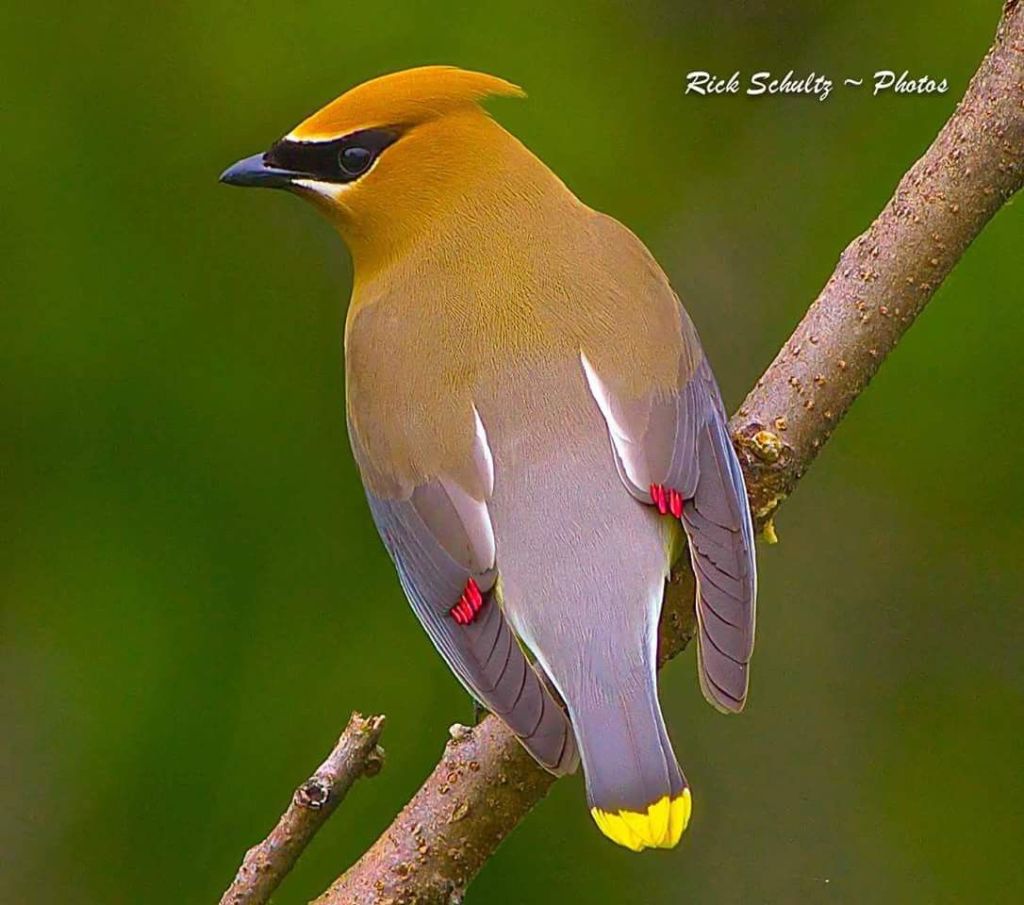
Cedar Waxwing

Pink Pagoda Mountain Ash
*the family of things refers to a line from Mary Oliver’s poem Wild Geese: “…over and over, announcing your place in the family of things”.
*With thanks to Nora Bateson’s Warm Data inquiry for the core question: How do I participate in this?, Hollyhock,08/22
NB: English language, derived from the very linear and efficient Greek alphabet, challenges expressions of relational essence. I work with this daily, by avoiding descriptors that are inherently objectifying, such as “it” and “that”. It’s no easy task!
Enchantment is the oldest form of medicine.
~ Carl Jung
 Gracious Unfurlings
Beautiful!
LikeLiked by 1 person
Haven’t gone through Reader on WP forever and was scrolling when I came to a screeching halt at the Arbutus tree photo and started to read…..was about two sentences in and thought how familiar the voice….looked at the name, :). Beautifully written.
LikeLike